
Samsung’s Smart Glasses Enter a Difficult Moment

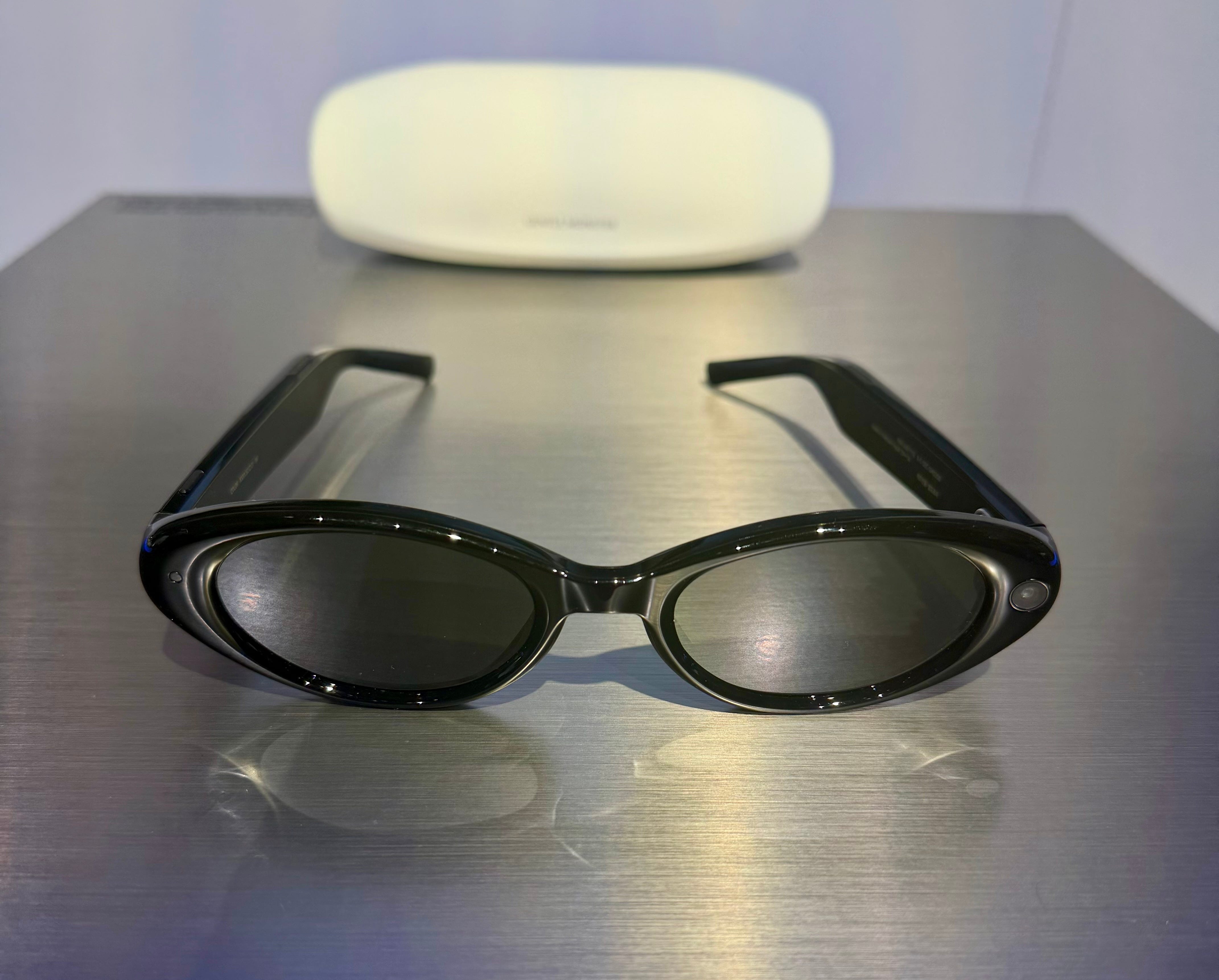
Samsung introduced its intelligent eyewear at Galaxy Unpacked in London, building on what it showed at Google I/O, and this was the first time I got to actually touch the devices. The lightness stood out immediately, on both the Gentle Monster and the Warby Parker frames. The Gentle Monster edition is a slim black frame, and the Warby Parker style has an upswept brow line in a warm brown. The cases follow a similar design to the Meta Oakley case, much lighter, with a locking mechanism that holds the glasses secure so they seat properly for charging. After three years of wearing Meta Ray-Bans and Oakleys as my everyday sunglasses, I have a feel for what these devices weigh and how they sit, and these felt like eyewear rather than hardware worn on the face. Both run on the Snapdragon AR1 platform with Gemini built in, and Samsung rates them at up to nine hours on a charge with seven more from the case.
They arrive at an awkward moment for the category.
The Backdrop
Meta launched its Kylie Jenner glasses a few weeks ago, and the reception was rough. The aspirational framing drew criticism, and the privacy questions that have followed Meta’s glasses for years resurfaced, including the familiar complaint about how easily the recording-indicator light can be defeated. The launch soured the conversation around smart glasses right as the category was gaining momentum.
Samsung’s glasses do not ship until the fall, and that timing works in their favor. The Meta noise has time to settle before Samsung’s hardware reaches people, which gives these glasses a fairer hearing than they would get today.
A Different Answer on Privacy
Samsung is not carrying Meta’s privacy baggage into that window, and its handling of the recording indicator is part of why. In a briefing, Samsung described tamper detection for the warning light. Rather than relying on an LED that a determined user can quietly disable, the system is built to flag when someone tries to defeat the indicator. That addresses the specific objection that has dogged camera glasses since the first Ray-Ban Meta pair, and it points to a company thinking about the bystander, not only the wearer.
That distinction is worth more right now than it would have been a year ago. I wrote recently that the AI backlash is really a big-tech trust problem, that people distrust the companies setting the guardrails more than they distrust the technology itself. Answering that in the hardware rather than in a statement is the right move.
Nice to Have Versus Genuinely Useful
The use cases that dominate smart glasses marketing are the ones that assume an able body and a life that already runs smoothly. Capturing a hike from your own point of view. Filming your kids without holding a camera. Getting a recipe read to you while your hands are busy. These are pleasant additions to lives that function fine without them, and they set the ceiling for the category at convenience.
The use cases that matter are the ones that change what a person can do independently. Reading a prescription label without asking for help. Following a conversation in a language you do not speak. Navigating an unfamiliar building without stopping to ask directions. Knowing who just walked into the room. These are not upgrades to an already smooth experience. They remove a barrier that was previously handled by asking another person, or not handled at all.
That gap is the whole argument for this category, and the marketing keeps landing on the wrong side of it. When the pitch is built around what makes an easy life marginally easier, the response is reasonable skepticism about whether anyone needed this. When the pitch is built around what makes a hard thing possible, the value is obvious and does not require a celebrity to sell it.
Design is what determines whether the second set of use cases reaches anyone. Assistive hardware that announces itself as assistive hardware carries a stigma, and people who could benefit from it often decline to wear it for that reason alone. The lightness I noticed on both frames matters here, because a device someone wears all day has to be one they forget they are wearing. The Gentle Monster and Warby Parker partnerships put these in a category people choose from rather than one they are prescribed, which is what lets the technology disappear into an ordinary outfit and reach the people it serves best.
Safer Than the Screen in Your Hand
There is a case that glasses are the better tool precisely in the moments a phone is the worse one. Walking through a city while reading directions off a screen means looking down instead of at the crossing in front of you. Navigation delivered through audio and a glance keeps your eyes on the world. The phone pulls attention away from your surroundings by design, and glasses can hand you the same information without asking you to stop looking where you are going.
Samsung frames its own pitch this way, describing eyewear that lets people stay engaged with the people, places and tasks around them without every interaction starting with a screen. That reframing turns the phone comparison around. The useful question is whether there are daily situations where a phone is the more dangerous or more isolating option, and there are plenty of them.
Why Gemini Changes the Value
I have said how much the arrival of Gemini on glasses excites me, and the reason is simple. The more capable the AI on the device, the more the device is worth to the person wearing it. A translation feature is useful. An assistant that can see what you see, hear what you hear, and reason about it in context is a different category of help.
This is where the accessibility case and the AI case converge. The stronger the model, the better it describes a room, parses a document, or guides someone through an unfamiliar space. Weak assistance on a face computer stays a gimmick, while capable assistance becomes a tool someone depends on daily.
Once the return sits with the AI rather than with capture, the camera stops being a camera in the way people currently understand it. It becomes a sensor, feeding the model the context it needs to be useful, and that context operates at a much lower resolution than recording does. The assistant needs to know there are people in the room, not who those people are. It needs to know there is text on the wall, not to store a photograph of it. That distinction is the entire privacy argument for this category, and it is a technical one rather than a policy one. A device built to sense context can be designed to discard identity, where a device built to capture is designed to keep everything.
It also raises the stakes on everything physical. If the assistant delivers, people will want the glasses on all day rather than reaching for them the way they reach for a camera, and that turns design and battery life from specifications into the constraints that decide whether any of this works. Nine hours with seven more from the case is a serious answer to that question, and frames light enough to forget are the other half of it.
Where This Leaves the Category
Samsung enters at a bad moment, but the timing of its launch is a quiet advantage. It has months for the Meta noise to fade, a privacy answer built into the hardware, and frames that look like glasses people would choose to wear. The opportunity is to lead with real value centered on privacy and security, including a hybrid AI approach that splits work between the phone and the cloud, and on a collaboration that puts one of the strongest models, the hardware engineering, and the processing power in the same product. Gemini from Google, the design and integration from Samsung, and the silicon from Qualcomm is a combination no one else in this category can currently assemble.